

Where to Find Vertigo Treatment Clinic in Hoboken, NJ?
Vertigo treatment utilizes targeted vestibular rehabilitation and specialized repositioning maneuvers to restore inner ear balance and alleviate debilitating symptoms like dizziness and nausea. At Hudson Sport & Spine in Hoboken NJ, Dr. Todd Givens, DC provides comprehensive diagnostics and advanced therapies designed to pinpoint the root cause of your specific vestibular condition. Visit our dedicated team of professionals today for a personalized evaluation, and let us help you safely regain your equilibrium and return to a stable, symptom-free lifestyle. For more information, contact us or book an appointment online. We are conveniently located at 70 Hudson St Suite 2B, Hoboken, NJ 07030.
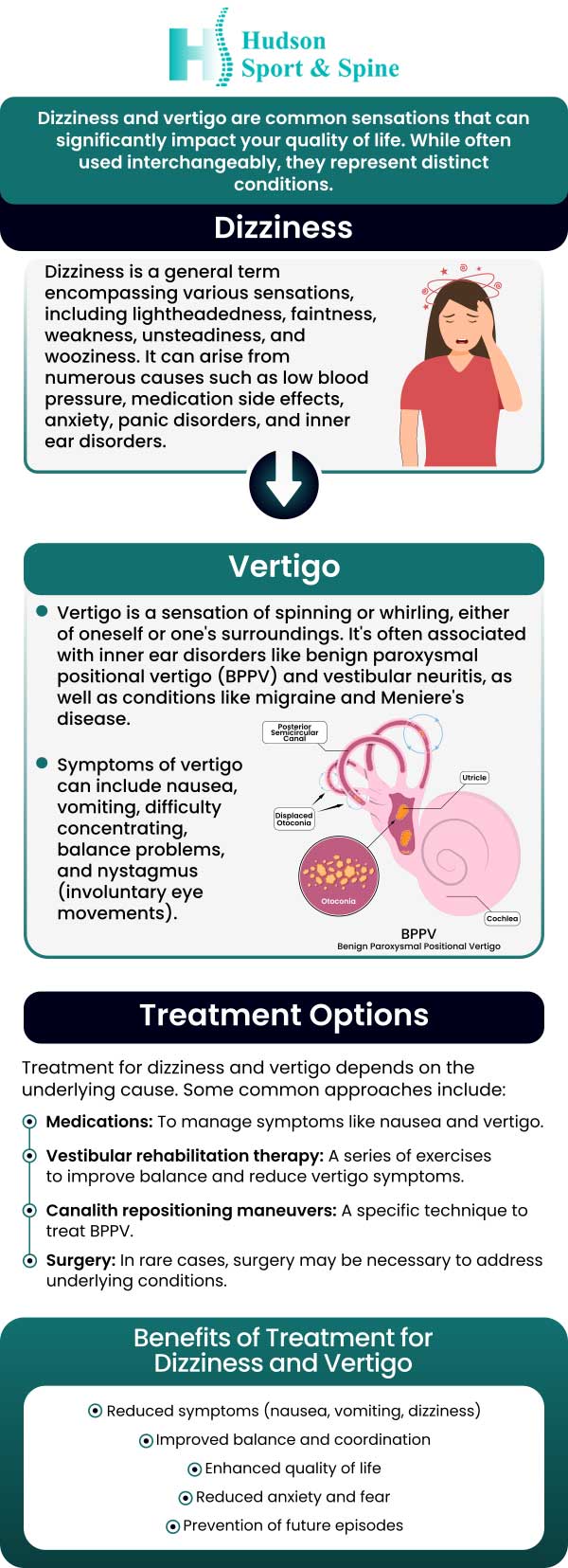
Table of Contents:
What causes vertigo?
How is vertigo diagnosed?
How is vertigo treated?
Can dehydration cause vertigo?
Why This Matters for Our Patients
How does Dr. Todd Givens, DC, help patients find lasting relief from vertigo through personalized treatment?
Vertigo is a distressing sensation of spinning or dizziness that can make you feel as if you or your surroundings are moving when there is no actual movement. At Hudson Sport & Spine, we frequently see patients struggling with vertigo—often due to issues within the inner ear, which plays a crucial role in maintaining your body’s balance.
Common Causes of Vertigo
● Benign Paroxysmal Positional Vertigo (BPPV): One of the most common causes we treat, BPPV occurs when tiny calcium crystals in the inner ear become dislodged, disrupting the normal balance signals sent to your brain. This can lead to sudden episodes of dizziness, especially when changing the position of your head.
● Vestibular Neuritis and Labyrinthitis: These conditions involve inflammation of the inner ear or the nerves connecting the ear to the brain, often triggered by viral infections. Patients may experience sudden, severe vertigo, sometimes accompanied by hearing changes.
● Meniere’s Disease: This chronic inner ear disorder can cause recurring episodes of vertigo, hearing loss, tinnitus, and a sensation of fullness in the ear. While the exact cause isn’t fully understood, Meniere’s is believed to be linked to abnormal fluid buildup in the inner ear.
● Other Causes: Vertigo can also result from head injuries, migraines, certain medications, neck (cervical spine) dysfunction, and, less commonly, neurological conditions such as multiple sclerosis or stroke. Anxiety or panic disorders can also cause dizziness, though these are not classified as true vertigo.
If you experience recurring or severe vertigo, it’s important to consult with a healthcare professional. At Hudson Sport & Spine, we are dedicated to helping you find relief from vertigo and improving your overall quality of life.
When you visit us with symptoms of vertigo—such as a spinning sensation, imbalance, dizziness, or related issues like nausea, headaches, or changes in hearing—our providers begin with a detailed medical history. We take the time to listen to your experiences, including the frequency and duration of vertigo episodes, and inquire about any recent illnesses, injuries, or medications that may be contributing to your symptoms.
During your examination, our skilled practitioners will assess your balance, coordination, and eye movements. We often perform specific maneuvers, such as the Dix-Hallpike test, to help determine if benign paroxysmal positional vertigo (BPPV) is present. Observing signs like nystagmus (rapid, involuntary eye movements) helps us further pinpoint the cause of your vertigo.
If additional information is needed, we may recommend further diagnostic tests, which can include:
● Hearing tests to evaluate inner ear function
● Blood work to rule out infections or metabolic issues
● Imaging studies (such as MRI or CT scans) if neurological causes are suspected
● Vestibular function tests (ENG or VNG) to assess the balance organs within the inner ear
At Hudson Sport & Spine, our multidisciplinary team—including chiropractic physicians, physical therapists, and medical doctors—works collaboratively to interpret your results and develop a treatment plan tailored to your unique needs.
Treatment for vertigo depends on its root cause, and our providers utilize several evidence-based approaches to address both symptoms and the underlying problem:
● Benign Paroxysmal Positional Vertigo (BPPV): For patients experiencing BPPV, our specialists perform canalith repositioning maneuvers, such as the Epley maneuver, right here in the office. These gentle, guided head movements help move calcium deposits out of the inner ear canals, often providing rapid symptom relief.
● Vestibular Neuritis or Labyrinthitis: If your vertigo results from inner ear inflammation or infection, we may recommend medications—such as antihistamines or antiemetics—to reduce dizziness and nausea. In some cases, corticosteroids may be prescribed to decrease inflammation and speed recovery.
● Ménière’s Disease: Our team provides guidance on dietary modifications, including salt reduction, to help control fluid retention in the inner ear. Medications are also used to manage acute symptoms and prevent episodes.
● Vestibular Rehabilitation Therapy: Chronic or persistent vertigo often responds well to vestibular rehabilitation, a specialized form of physical therapy offered at Hudson Sport & Spine. Our therapists work with you to improve your balance and help your brain adapt to changes in your inner ear.
● Migraine-Related Vertigo: If migraines are contributing to your vertigo, we can help you implement lifestyle changes and recommend preventive medications as part of a comprehensive treatment plan.
In rare cases where vertigo is severe and unresponsive to conservative management, we can discuss advanced options and refer you to trusted specialists if necessary.
Vertigo is the sensation of spinning or dizziness, often linked to problems in the inner ear or nervous system. Your inner ear is crucial for maintaining balance, and it relies on proper fluid levels to function. When you become dehydrated—whether from intense physical activity, inadequate fluid intake, or illness—the fluid balance in these inner ear structures is disrupted. This can lead to symptoms like vertigo and dizziness.
Dehydration also lowers blood pressure and decreases blood flow to your brain, further increasing your risk for dizziness or lightheadedness. Common symptoms of dehydration include dry mouth, excessive thirst, fatigue, and decreased urination. If you notice these symptoms along with vertigo, dehydration may be a contributing factor.
As a sports medicine and chiropractic practice, Hudson Sport & Spine sees many athletes and active individuals who are at higher risk for dehydration—especially after rigorous exercise, hot weather workouts, or illnesses causing vomiting or diarrhea. Ensuring you stay hydrated is not only important for performance and recovery, but also for preventing balance issues that could affect your spine, joints, and overall mobility.
When to Seek Help
While rehydration can often relieve mild vertigo caused by dehydration, it’s important to remember that vertigo can have many other causes, including ear infections, vestibular disorders, migraines, and even spinal or neurological conditions. If your vertigo is severe, persistent, or comes with other concerning symptoms such as chest pain, severe headache, or vision changes seek immediate medical attention to rule out more serious issues.
At Hudson Sport & Spine, Dr. Todd Givens, DC, specializes in providing personalized care to patients suffering from vertigo. Understanding how disruptive vertigo can be, he begins with a thorough evaluation to uncover the root causes of your dizziness, imbalance, or unsteadiness. This process includes reviewing your medical history, conducting a physical exam, and performing vestibular system tests to assess how your inner ear and balance mechanisms are functioning.
Once the cause of your vertigo is identified, Dr. Givens develops a customized treatment plan specifically tailored to your needs. This may include gentle chiropractic adjustments, particularly to the cervical spine, as misalignments in this area can disrupt the nerves responsible for balance. Dr. Givens also incorporates vestibular rehabilitation exercises to retrain your brain and inner ear to process movement more effectively. Through his expertise, he empowers patients to regain control over their balance, improve mobility, and experience lasting relief from vertigo. With a focus on individualized care, Dr. Givens helps you live without the limitations caused by vertigo. For more information, contact us or book an appointment online. We are conveniently located at 70 Hudson St Suite 2B, Hoboken, NJ 07030. We serve patients from Hoboken NJ, Jersey City NJ, Weehawken NJ, West New York NJ, Guttenberg NJ, Secaucus NJ, Harrison NJ, Kearny NJ, Newark NJ, Belleville NJ, North Bergen NJ and Lyndhurst NJ.
Check Out Our 5 Star Reviews




 Send Text
 How May I Help You?